AGNC Investment Joins an Exclusive Club 📌
AGNC Investment (NASDAQ: AGNC) officially joined the S&P MidCap 400 Index before the market opened on Sept. 21, part of the index's quarterly rebalancing. This is more than just a headline — it's a structural shift in who owns the stock.
As a result of this inclusion, AGNC also gains membership in the S&P Composite 1500, S&P 900, and S&P 1000 indexes. For a mortgage REIT with a market cap around $12 billion, this is a significant milestone that CEO Peter Federico called "a testament to the scale AGNC has attained over our 18-year history."
But here's the question income investors really care about: does this make the 14.6% dividend yield any safer? Let's break it down. 🚨

Why Index Inclusion Matters for AGNC
The S&P MidCap 400 tracks 400 mid-sized U.S. companies — those that have outgrown small-cap status but haven't yet reached the scale of S&P 500 giants. Getting added to this benchmark triggers automatic buying pressure from passive funds.
The Passive Fund Effect 💰
When a stock joins a major index, every ETF and mutual fund that tracks that index is forced to buy shares to mirror the benchmark. The Vanguard S&P Mid-Cap 400 ETF, for example, must now hold AGNC in its portfolio.
This creates:
- Immediate demand from index funds rebalancing
- Higher institutional ownership over time
- Improved liquidity and potentially lower volatility
- Price support that makes it easier to raise equity capital
For a company like AGNC, which relies on capital markets access to fund its Agency MBS investments, this structural tailwind is genuinely meaningful. 📈

The Dividend Picture: No Direct Impact, But a Better Backdrop
Let's be crystal clear: index inclusion does not directly change AGNC's dividend. The REIT still pays $0.12 per share monthly — a rate it has maintained since cutting it to that level back in April 2020.
Key Metrics at a Glance
| Metric | Value |
|---|---|
| Current Monthly Dividend | $0.12 per share |
| Annualized Dividend | $1.44 per share |
| Current Dividend Yield | 14.6% |
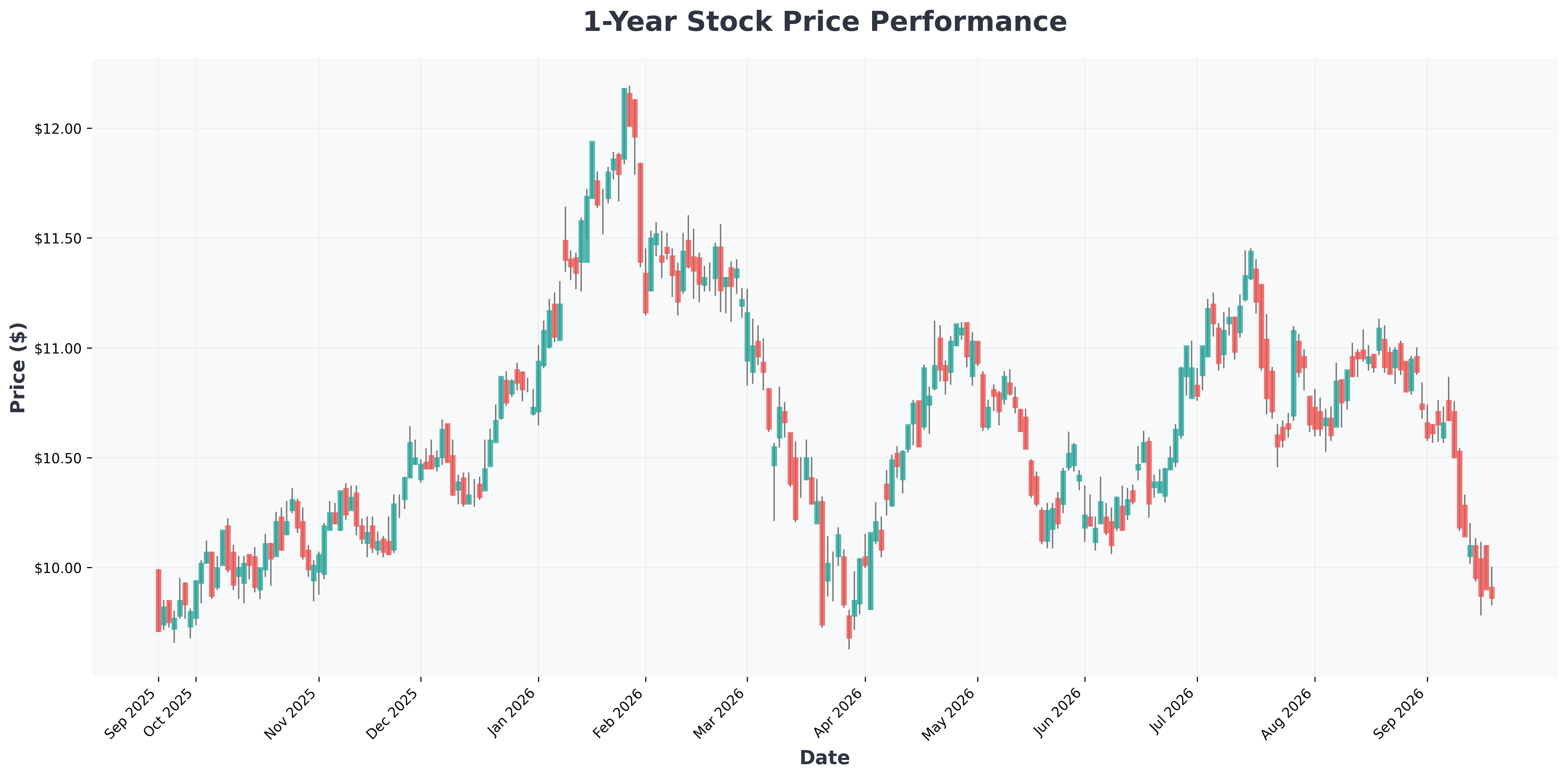
| Stock Price Range (52wk) | $9.63 – $12.19 |
| Market Cap | ~$12 billion |
| Average Volume | 22.1M shares |
Why the Yield Is So High
The yield has climbed not because the dividend increased, but because the share price slumped roughly 20% from its high earlier this year. The culprit? A challenging rate environment. Mortgage REITs are extremely sensitive to interest rate moves, and the recent resurgence in inflation — driven in part by geopolitical tensions — pushed the Federal Reserve to hike rates for the first time in three years.
The Real Driver of Dividend Sustainability 🔍
Unlike equity REITs that collect rent, AGNC's dividend sustainability hinges on its ability to earn a return on equity above its cost of capital. On its Q2 earnings call, management noted current returns in the 15% to 17% range, which Federico said "aligns really well with the economics of our dividend."
Index inclusion provides some additional price support, which makes it easier for AGNC to raise equity capital at favorable terms — indirectly supporting that return-on-equity equation.
The index inclusion news has split the income investing community. Here's how the bull and bear cases are shaping up:
📊 In-Depth Fundamental Analysis
| Company | Share Price | P/E Ratio | P/B Ratio | ROE | Operating Margin (OPM) | Revenue Growth |
|---|---|---|---|---|---|---|
| AGNC (AGNC) | $10 | 4.96 | 1.10 | 19.80% | 95.61% | 0.00% |
| AGNCL (AGNC) | $25 | 0.00 | 2.79 | 19.80% | 95.61% | 0.00% |
| AGNCM (AGNC) | $25 | 0.00 | 2.79 | 19.80% | 95.61% | 0.00% |
| AGNCN (AGNC) | $26 | 0.00 | 2.84 | 19.80% | 95.61% | 0.00% |
| AGNCO (AGNC) | $26 | 0.00 | 2.83 | 19.80% | 95.61% | 0.00% |
| AGNCP (AGNC) | $25 | 0.00 | 2.79 | 19.80% | 95.61% | 0.00% |
| AGNCZ (AGNC) | $25 | 0.00 | 2.79 | 19.80% | 95.61% | 0.00% |

Scenario Analysis: Where AGNC Goes From Here
Bull Case 🐂
- Index fund buying provides a durable price floor near recent levels
- Improved capital markets access allows AGNC to grow its Agency MBS portfolio accretively
- Return on equity stays in the 15%–17% range, comfortably covering the dividend
- If the Fed pivots to rate cuts, book values could recover sharply and the share price follows
Bear Case 🐻
- Inflation stays sticky and the Fed hikes further, pressuring mortgage REIT book values
- Return on equity compresses below cost of capital, forcing another dividend cut
- Passive inflows prove temporary as active investors rotate out of rate-sensitive names
- Share price continues drifting lower, pushing the yield even higher — a classic warning signal
Technical Context 📉
AGNC has been trading in a tight range between roughly $9.60 and $10.00 since the index announcement, with the 52-week low at $9.63 acting as a critical support zone. A sustained break below that level would signal that passive buying isn't enough to offset rate-driven selling pressure. Conversely, reclaiming the $10.50 area could open a path back toward the $12 range. Historically, mortgage REITs have shown strong mean-reversion tendencies after rate-hike cycles peak — a pattern worth watching.
The Bottom Line
Index inclusion is a genuine milestone for AGNC Investment, especially in an era where passive investing dominates flows. It broadens the shareholder base, improves liquidity, and provides a modest structural tailwind.
But it does not make the dividend safer. AGNC will always be a higher-risk income stock because of its exposure to interest-rate fluctuations. If returns fall out of alignment with costs, another dividend cut is always on the table. Income investors should size this position accordingly — treat the 14.6% yield as compensation for real risk, not a free lunch. 🎯