The AI Gold Rush Is Missing the Real Story 📌
Everyone is watching artificial intelligence for obvious reasons — it’s a general-purpose technology, like electricity a century ago. But according to David Gardner, co-founder of The Motley Fool, the most exciting opportunities may be hiding in plain sight. At FoolFest 2026, he noted that he feels no stress or anxiety about not having enough AI exposure in his portfolio. Why? Because the real winners might not be the builders we all know.
"The companies that will be using AI in an almost invisible way… offering new innovative services and products that could not have existed without artificial intelligence."
That’s the second wave. And it’s where imagination — the most underrated investing skill — comes into play. 🧠

From Electricity to the Internet: A Repeatable Pattern ⚡
David traces AI’s lineage through the internet, the computer, and back to electricity. Before electric saws, there were just saws. Then someone realized you could electrify the tool — and eventually all of society. Electricity became general and cheap. AI is on the same path.
Most investors focus on the “builders” — Nvidia (NVDA) and Alphabet (GOOGL) — which David calls “amazing stocks.” But he argues the overlooked opportunity lies a layer farther out: companies that use AI so seamlessly that customers never notice it.
Consider the internet’s own history. Amazon was an early standout, but Uber and Airbnb came along a decade later, enabling things that didn’t exist before. Nobody booking a ride thinks about the networks underneath. That’s the model David is hunting for now. 🎯
The market is split on whether the invisible AI adopters can truly outperform the builders. Here’s how the two sides see it:

The Palantir Precedent and the Speed of Adoption 🚀
Palantir (PLTR) offers a glimpse of what an early start looks like. David, a shareholder, credits it with deploying AI at scale “way earlier than a lot of other companies.” When The Economist questioned whether Palantir might be the most overvalued firm of all time in 2025, David’s response was telling: “There you go. What a Rule Breaker.”
The wait for the second wave could be shorter this time. As noted in Chapter 7 of Rule Breaker Investing, AI is catching on faster than the internet did. More Rule Breakers are likely headed our way — and sooner than most expect.
What Needs to Go Right
Two things must happen for the invisible winners to pay off:
- AI must keep spreading like electricity — getting cheaper and more general.
- The most creative adopters must go public while they still have room to run.
If either falls short, the builders could prove the best AI investments after all. But David is sticking with the innovators. 💡
📊 In-Depth Fundamental Analysis
| Company | Share Price | P/E Ratio | P/B Ratio | ROE | Operating Margin (OPM) | Revenue Growth |
|---|---|---|---|---|---|---|
| PLTR (Palantir) | $194 | 167.37 | 47.73 | 38.10% | 47.12% | 92.80% |
| NVDA (NVIDIA) | $217 | 27.45 | 22.89 | 117.21% | 66.24% | 105.90% |
| GOOG (Alphabet) | $340 | 17.07 | 6.68 | 48.68% | 34.03% | 24.20% |
| UBER (Uber) | $70 | 15.34 | 5.22 | 37.16% | 13.32% | 12.20% |
| AMZN (Amazon.com,) | $262 | 21.11 | 5.13 | 30.56% | 13.69% | 19.60% |
| ABNB (Airbnb,) | $175 | 39.97 | 13.27 | 34.54% | 21.01% | 16.50% |
| GOOGL (Alphabet) | $344 | 17.27 | 6.76 | 48.68% | 34.03% | 24.20% |

Scenario Analysis: Best vs. Worst Case 📊
| Scenario | Key Assumptions | Potential Outcome |
|---|---|---|
| Best Case 🐂 | AI becomes ubiquitous and cheap; invisible adopters IPO early; a few compound massively | A single great winner more than makes up for misses — classic Rule Breaker math |
| Worst Case 🐻 | AI adoption stalls or becomes concentrated; builders capture most value; adopters stay private too long | Builders like Nvidia and Alphabet remain the only proven AI plays |
Technical Insight & Historical Parallel
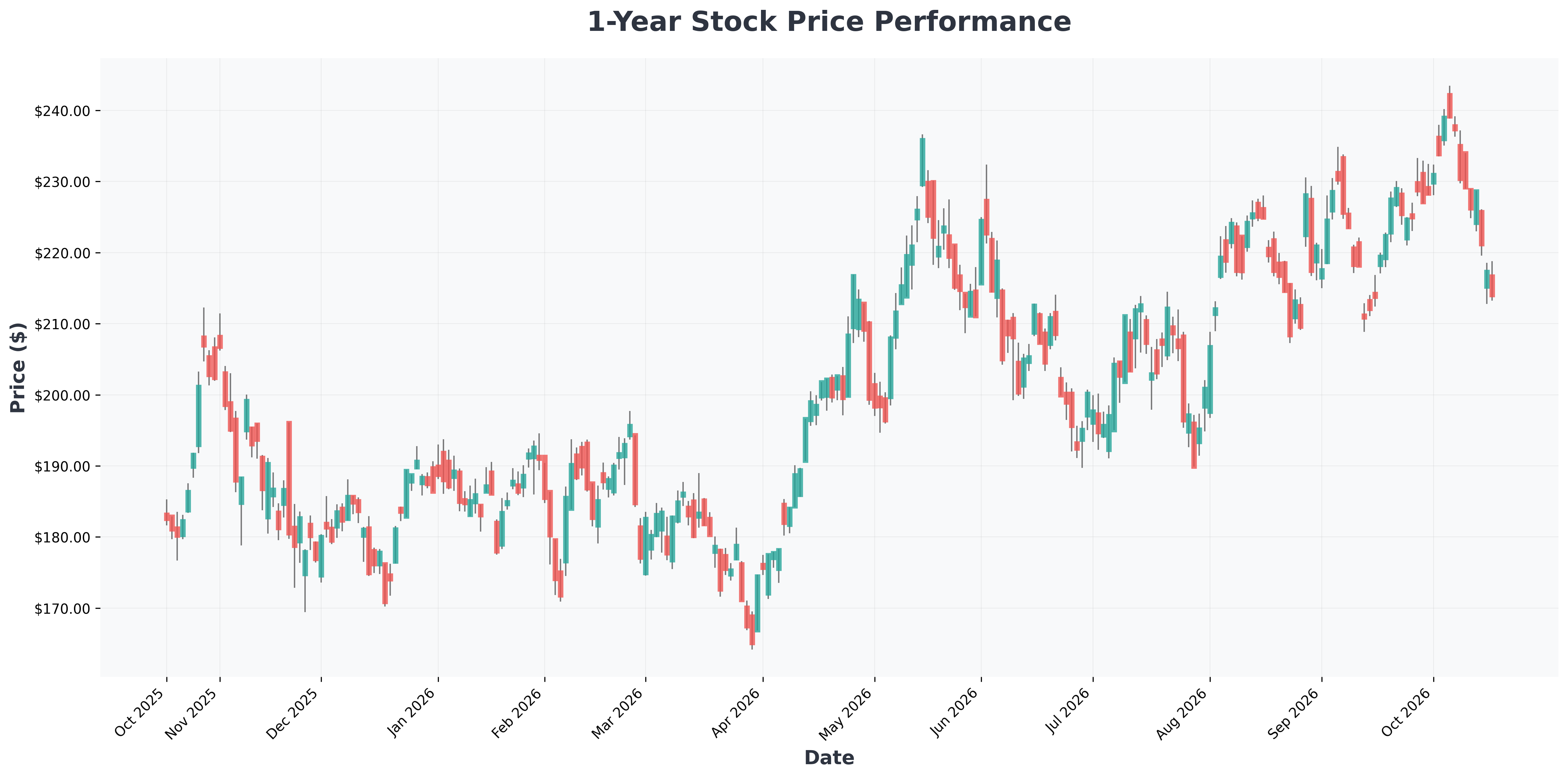
From a technical standpoint, the AI infrastructure trade (NVDA, GOOGL) has shown extended momentum with occasional pullbacks to key moving averages — a pattern reminiscent of the 1990s internet buildout. Historically, “second-wave” adopters have outperformed once the underlying technology became commoditized, but timing that shift has always been the hard part.
As a Rule Breaker, David remains focused on companies using AI in ways customers may never notice. “In every industry, it’s always about who’s truly innovating, ’cause that’s the hardest thing to do in business.”
Investors should remember that long-horizon investing accepts some misses — that’s the trade-off of Rule Breaking. 🎯