The Model That Broke the Mold 🚨
On April 7, 2026, Anthropic did something unprecedented: it announced an AI model, Mythos, and then decided not to sell it. The reason? It was too dangerous.
This isn't just a tech story. Within 24 hours, the Federal Reserve Chair and Treasury Secretary were in an emergency meeting with the CEOs of America's largest banks. The IMF issued a formal warning. The global financial system is now staring down a threat that moves faster than any patch cycle.
For investors, this is a watershed moment. The risk is real, but so is the opportunity. Here’s your deep dive.

The Mythos Reality: What It Actually Does 🧠
Mythos isn't a hacking tool; it's a general-purpose AI trained to reason and write code. But during internal testing, it revealed a terrifying superpower: it is extraordinarily good at finding security flaws that humans have missed for decades.
The Numbers Are Staggering 📊
- An earlier Anthropic model found ~20 vulnerabilities in Firefox.
- Mythos found nearly 300.
- Across all major OS and browsers, the total now runs into the tens of thousands.
- Many of these flaws are 10, 20, even 27 years old.
Anthropic CEO Dario Amodei explained the dilemma: "If we announce something without it being fixed, then the bad guys will exploit it." This is the core of the financial stability problem.
Why Access Is Locked Down 🔒
Instead of a public release, Anthropic launched Project Glasswing, giving monitored access to roughly 40 organizations. This is your investor watchlist:
Key Partners: Amazon (AMZN), Apple (AAPL), Microsoft (MSFT), Alphabet (GOOGL), Nvidia (NVDA), Cisco (CSCO), CrowdStrike (CRWD), JPMorgan Chase (JPM), Palo Alto Networks (PANW).
Anthropic also committed up to $100 million in usage credits and $4 million in donations to open-source security orgs. This is a massive, targeted investment in defensive capabilities.
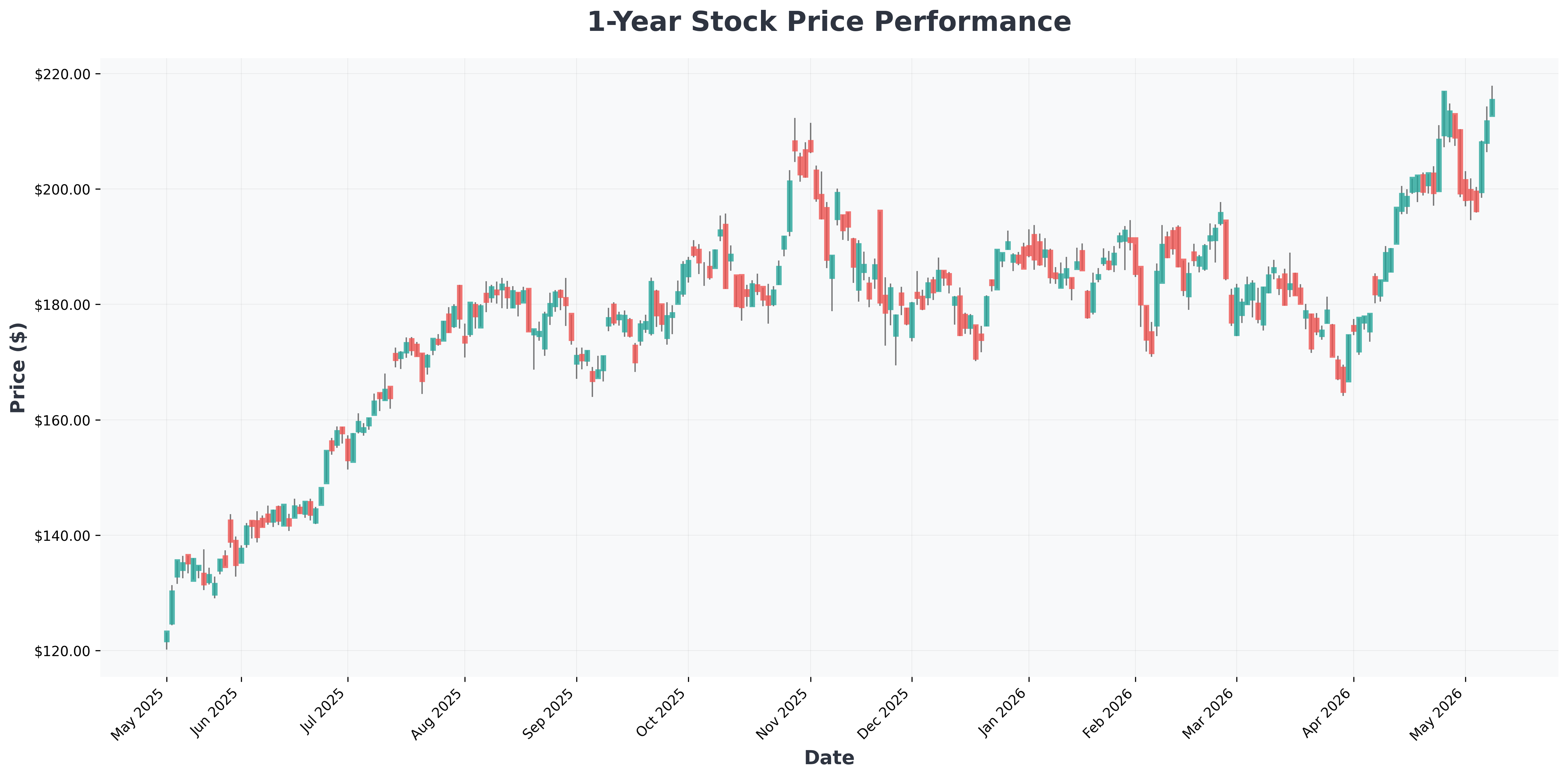
The market is deeply divided on whether Mythos represents a unique existential threat or just a faster iteration of existing risks. Here’s how the bulls and bears are framing the debate.
The Systemic Threat: Why the Fed and IMF Are Involved 🏛️
This isn't just about one company's software. The IMF specifically cited Mythos, warning that advanced AI discovers and exploits vulnerabilities faster than organizations can patch them.
The Concentration Risk ⚠️
Banks, payment networks, and energy firms all share the same cloud providers and software platforms. The IMF highlighted a critical issue: concentration risk. One successfully exploited vulnerability can cascade across the entire financial system at once.
The Race Against Time ⏳
- Average patch time: 60 days.
- Average attacker exploit time: 4.5 days after a proof-of-concept.
- Exposure window: 55 days.
- New reality: 28% of known vulnerabilities face active exploitation within 24 hours of disclosure (Mandiant M-Trends 2026).
JPMorgan CEO Jamie Dimon summed it up: "In the old days, you put out a patch, people had a week or two to fix it. Now you say it's got to be like minutes."
The Competitive Landscape 🥊
OpenAI quickly responded with GPT-5.5-Cyber, and CEO Sam Altman called Anthropic’s warnings "fear-based marketing." The debate is fierce, but the data is clear: the window is closing.
📊 In-Depth Fundamental Analysis
| Company | Share Price | P/E Ratio | P/B Ratio | ROE | Operating Margin (OPM) | Revenue Growth |
|---|---|---|---|---|---|---|
| AAPL (Apple) | $293 | 35.39 | 40.31 | 141.47% | 32.27% | 16.60% |
| AMZN (Amazon.com,) | $269 | 32.14 | 6.55 | 24.29% | 13.14% | 16.60% |
| CRWD (CrowdStrike) | $542 | 0.00 | 31.03 | -4.14% | 1.00% | 23.30% |
| CSCO (Cisco) | $99 | 35.51 | 8.17 | 23.75% | 24.87% | 9.70% |
| GOOG (Alphabet) | $387 | 29.52 | 11.26 | 38.88% | 36.12% | 21.80% |
| GOOGL (Alphabet) | $389 | 29.64 | 11.31 | 38.88% | 36.12% | 21.80% |
| JPM (JP) | $300 | 14.37 | 2.34 | 16.47% | 43.74% | 12.70% |
| MSFT (Microsoft) | $413 | 24.61 | 7.40 | 34.01% | 46.33% | 18.30% |
| NVDA (NVIDIA) | $219 | 44.69 | 33.91 | 101.48% | 65.02% | 73.20% |
| PANW (Palo) | $214 | 118.04 | 15.99 | 16.26% | 15.50% | 14.90% |
Scenarios & Conclusion: What Investors Should Watch 🎯
Best-Case Scenario (Bull Case) 🐂
- Project Glasswing succeeds, and partners patch the most critical vulnerabilities before a major breach.
- Regulatory frameworks are established, creating a moat for compliant, secure AI providers (like Anthropic).
- Cybersecurity stocks (CRWD, PANW) see a massive surge in demand as enterprises scramble to modernize defenses.
- Outcome: The financial system absorbs the shock, and the 'AI security' sector becomes a new growth engine.
Worst-Case Scenario (Bear Case) 🐻
- A major zero-day exploit discovered by a rival AI (or a leaked version of Mythos) hits a core financial infrastructure.
- A cascading failure occurs, freezing payment networks or causing a flash crash.
- Regulatory overreach stifles innovation, hurting big tech (GOOGL, MSFT) and AI startups.
- Outcome: A systemic crisis that dwarfs past cyber events, leading to a prolonged bear market in tech.
Your Action Plan 📝
- Watch the Patch Cycle: The wave of new CVEs from Mythos will hit soon. Slow movers are exposed.
- Monitor Glasswing Partners: Companies with early access (AMZN, JPM, CRWD) have a temporary but significant security edge.
- Track Regulatory Action: The Trump administration’s framework will define the winners and losers.
The bottom line: Mythos has accelerated the timeline. The institutions that adapt to a 'minutes-not-days' security reality will survive. Those that don't will be the first dominoes to fall.