🚀 The Race for the Biggest IPO Ever
SpaceX is officially going public. With a target valuation of $1.75 trillion and plans to raise $75 billion by selling 555.6 million shares at $135 apiece, this will be the largest IPO in history by both capital raised and market cap. That valuation would instantly make SpaceX the 9th largest publicly traded company in the world, sitting just behind Broadcom and ahead of Tesla.
But here's the real question every investor should be asking: Do the biggest IPOs actually deliver for early buyers? 📌
History offers a clear — and often brutal — answer. Let's dive into the data.
📊 A Look Back at the Record-Breakers
Uber Technologies (UBER) — Raised $8.1B
- IPO Date: May 10, 2019
- Initial Valuation: $82.4B
- Performance: +58% since IPO, but it took years to recover from early losses. The stock fell sharply after the initial hype faded, and the COVID-19 crash didn't help.
AT&T Wireless — Raised $10.6B
- IPO Date: April 27, 2000
- Initial Valuation: $68.1B
- Performance: A historical footnote. The company was acquired by Cingular in 2004. The IPO happened right at the peak of the dot-com bubble — terrible timing.
Rivian Automotive (RIVN) — Raised $11.9B
- IPO Date: Nov 10, 2021
- Initial Valuation: $66.5B
- Performance: 📉 Down 77% from its IPO price of $78. A cautionary tale about EV hype meeting reality.
General Motors (GM) — Raised $20.1B
- IPO Date: Nov 17, 2010
- Initial Valuation: $63B
- Performance: ✅ Up 150%+ since IPO. One of the rare success stories for patient investors.
Facebook / Meta (META) — Raised $16B
- IPO Date: May 18, 2012
- Initial Valuation: $104B
- Performance: ⚠️ Dropped 50%+ in the first 18 weeks, then went on to gain 1,600%. A textbook example of why short-term panic is often wrong.
Alibaba (BABA) — Raised $25B
- IPO Date: Sept 18, 2014
- Initial Valuation: $167.7B
- Performance: 🎢 A wild ride. The stock fell below its IPO price within a year, then recovered spectacularly before facing regulatory headwinds.
Visa (V) — Raised $19.1B
- IPO Date: March 19, 2008
- Initial Valuation: $39B
- Performance: ✅ Surging immediately after IPO, but dropped 50%+ within three months. Long-term holders are up massively.
The upcoming SpaceX IPO has split the market into two camps. Here's what the bulls and bears are saying:
🧠 The Pattern That Repeats
| Company | Amount Raised | Initial Valuation | 1-Year Post-IPO Performance | Long-Term Outcome |
|---|---|---|---|---|
| Uber | $8.1B | $82.4B | Negative | +58% (patient) |
| AT&T Wireless | $10.6B | $68.1B | N/A (acquired) | N/A |
| Rivian | $11.9B | $66.5B | -77% | Still underwater |
| GM | $20.1B | $63B | Flat | +150% |
| $16B | $104B | -50% | +1,600% | |
| Alibaba | $25B | $167.7B | Below IPO | Volatile |
| Visa | $19.1B | $39B | -50% (temporary) | Massive gains |
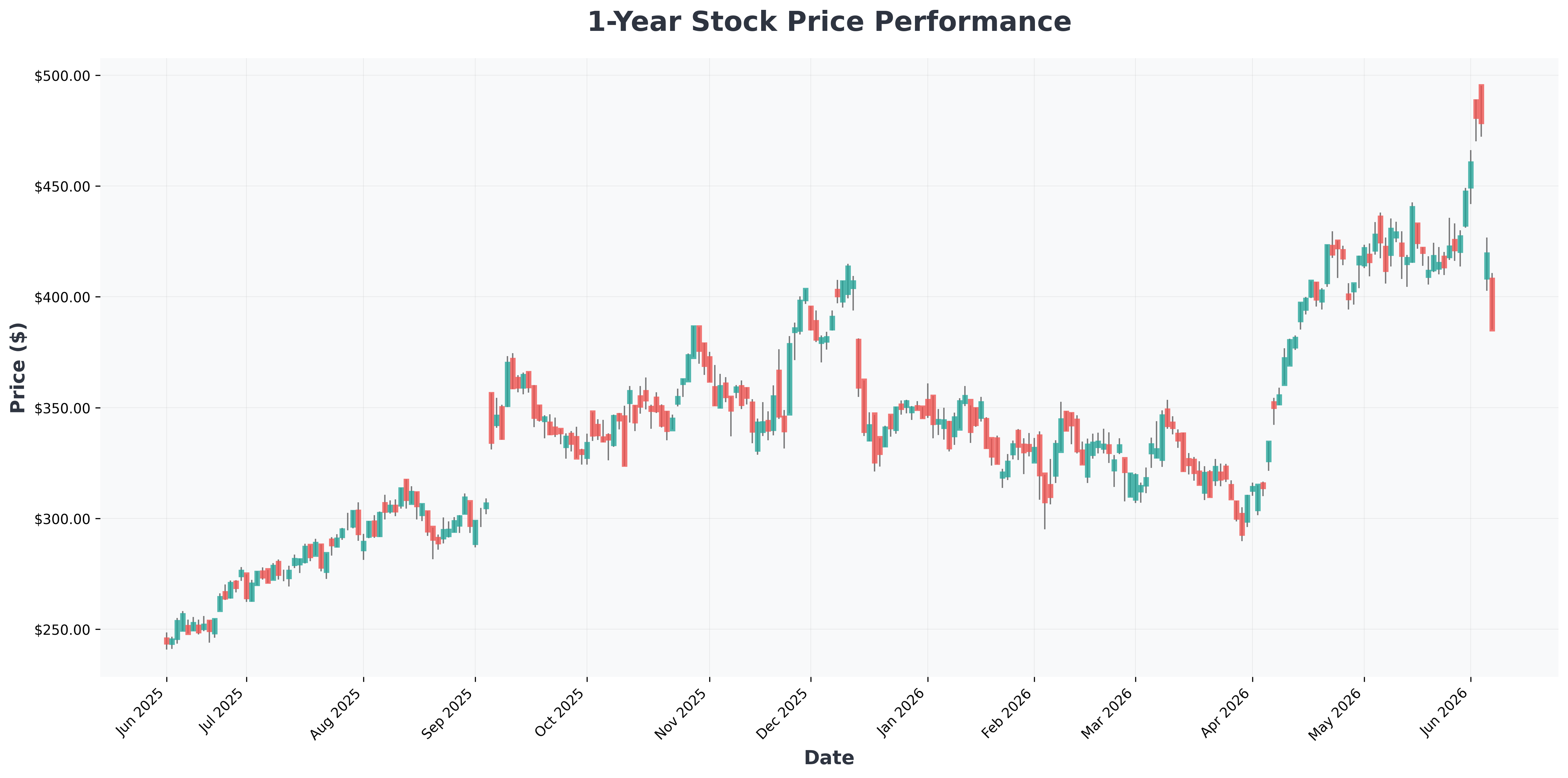
Key Insight: Nearly every mega-IPO experienced a significant drawdown within 6–18 months of listing. The hype-driven initial spike is almost always followed by a reality check. But for those who held on, the long-term returns have been extraordinary in most cases.
If we apply a simple technical lens, the pattern suggests that buying an IPO on day one is rarely the optimal entry. Waiting for the first major correction (often 30-50% from peak) has historically been a far better strategy. This mirrors the concept of "post-IPO lockup expiry" weakness that seasoned traders watch for.
📊 In-Depth Fundamental Analysis
| Company | Share Price | P/E Ratio | P/B Ratio | ROE | Operating Margin (OPM) | Revenue Growth |
|---|---|---|---|---|---|---|
| AVGO (Broadcom) | $386 | 64.07 | 20.88 | 37.28% | 48.99% | 47.90% |
| BABA (Alibaba) | $121 | 18.62 | 1.79 | 9.22% | 1.01% | 2.90% |
| DTEGY (Deutsche) | $32 | 15.22 | 2.10 | 14.43% | 21.37% | 0.40% |
| GM (General) | $82 | 29.97 | 1.18 | 4.01% | 9.36% | -0.90% |
| META (Meta) | $593 | 21.55 | 6.18 | 32.93% | 40.62% | 33.10% |
| RIVN (Rivian) | $16 | 0.00 | 4.68 | -65.69% | -63.79% | 11.40% |
| T (AT&T) | $23 | 7.48 | 1.45 | 18.37% | 22.72% | 2.90% |
| TSLA (Tesla,) | $391 | 358.72 | 17.86 | 4.90% | 4.20% | 15.80% |
| TpC (Tutor) | $71 | 48.31 | 3.06 | 11.40% | 4.29% | 11.50% |
| UBER (Uber) | $71 | 17.55 | 5.82 | 35.31% | 14.56% | 14.50% |
| V (Visa) | $324 | 28.26 | 17.36 | 60.35% | 67.35% | 17.10% |

🎯 Conclusion: What This Means for SpaceX
SpaceX is a unique beast. Its valuation of $1.75 trillion is unprecedented, and the hype around Elon Musk's space empire is real. But history is clear: the biggest IPOs almost always stumble before they run.
- Bull Case: SpaceX is a category-defining company with no direct public competitor. If it delivers on Starship and Starlink, the long-term upside could dwarf even Meta's returns.
- Bear Case: At $1.75 trillion, nearly all the good news is already priced in. Any execution miss — a rocket failure, regulatory delay, or Starlink revenue slowdown — could trigger a brutal sell-off.
My advice: Don't chase the IPO on day one. Let the dust settle. Watch for the inevitable post-hype dip, and if the fundamentals hold, that's your entry point. 🎯