QQQ Is Leaving the Broader Market in the Dust 📌
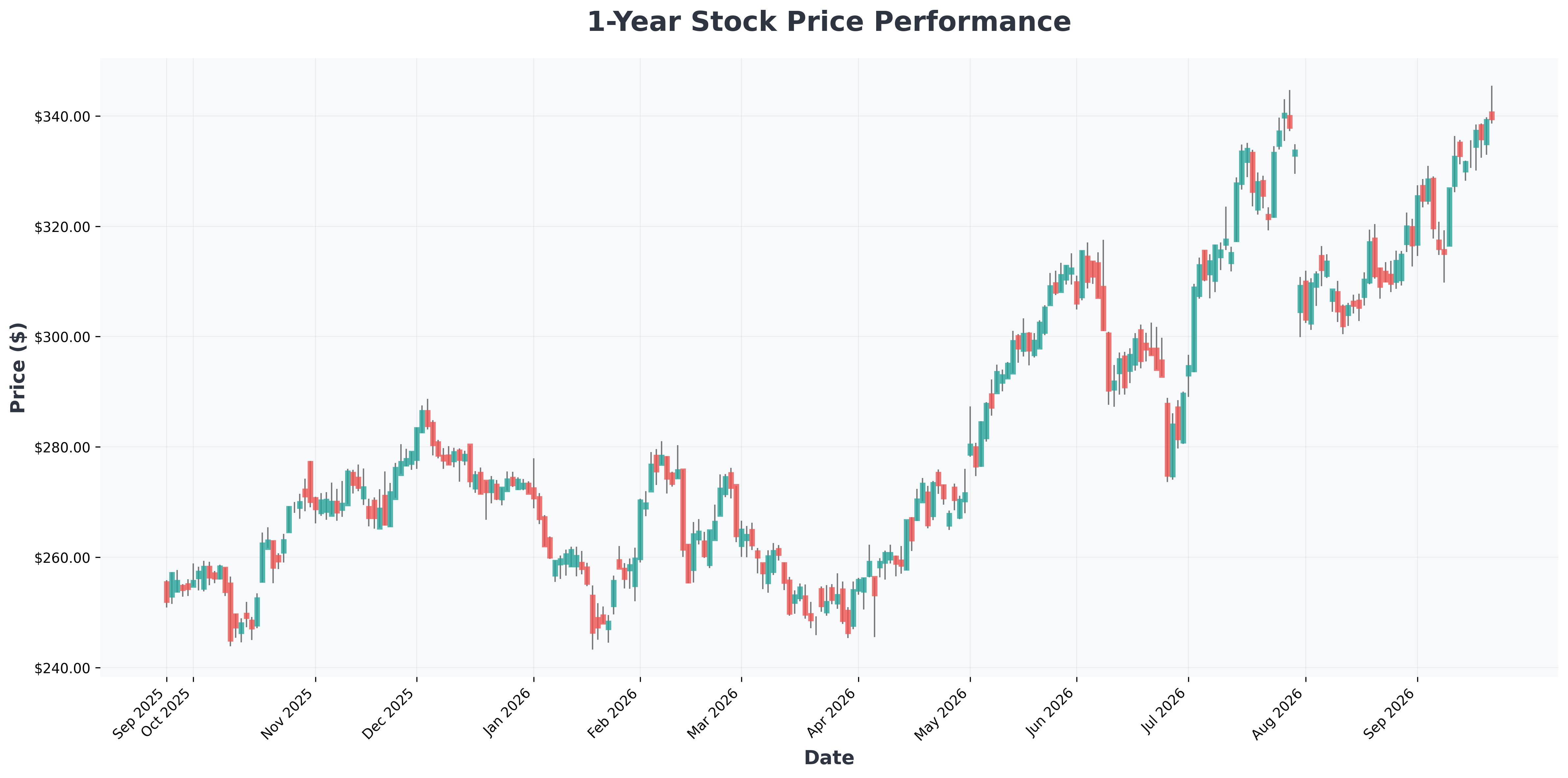
The Invesco QQQ Trust (QQQ) has quietly become one of 2026's standout performers, climbing more than 20% year-to-date. For context, the S&P 500 has managed only 13%, while the Nasdaq Composite sits at 16%. That's a meaningful gap — and it's not accidental.
QQQ passively tracks the Nasdaq-100 index, a curated basket of the 100 largest non-financial companies listed on the Nasdaq exchange. That structural difference is the entire story: by excluding financials and concentrating capital into a smaller pool of high-growth names, QQQ gives investors a leveraged-style exposure to innovation without the leverage.
With roughly $496 billion in assets under management and a rock-bottom 0.18% expense ratio, it's one of the cheapest ways to own the market's growth engine. But the real question investors are asking now is simpler: can it keep running?

Why QQQ Keeps Beating the Benchmarks 🎯
The Nasdaq-100's construction rules do a lot of heavy lifting here. Financial stocks — which drag on returns during rate-sensitive cycles — are excluded entirely. What remains is a roster of companies whose earnings are tied to innovation, not interest rate cycles.
The top holdings tell the story:
- Nvidia (NVDA): 8.3%
- Apple (AAPL): 7.4%
- Microsoft (MSFT): 5.5%
- Micron (MU): 5.1%
- AMD: 4.2%
Yes, these same names sit atop the S&P 500 — but QQQ allocates a much larger slice to each because it only holds 100 companies instead of 500. The index also rebalances quarterly and reconstitutes annually, meaning it keeps winners, adds emerging high-growth names, and prunes laggards.
That self-cleaning mechanism is why QQQ has historically stayed ahead of broader benchmarks. It's essentially a momentum-tilted growth fund disguised as a passive index ETF.
The bull and bear case for QQQ have rarely been this sharply divided. Here's how each side is framing the next 12 months:

The AI Engine Behind the Rally 🤖
Every single top holding in QQQ is plugged directly into the AI buildout:
| Company | Role in AI Ecosystem |
|---|---|
| Nvidia | GPU chips for AI clusters |
| Micron | High-bandwidth memory for AI servers |
| AMD | AI accelerators & data center CPUs |
| Microsoft | Azure cloud + generative AI apps |
| Apple | On-device AI integration |
| Amazon, Meta, Alphabet, Tesla | Cloud, models, autonomy |
What's striking is the valuation disconnect. Nvidia trades at roughly 15x next year's earnings, even as analysts project EPS growth at a 60% CAGR through fiscal 2029. That's an unusually compressed multiple for a company growing at that pace — a signal some analysts read as the market underpricing the durability of the AI capex cycle.
There are near-term headwinds, to be sure: more cautious enterprise AI spending, tighter regulation in the US and EU, and higher-for-longer rates all pose risks. But the structural thesis — that AI will optimize, accelerate, and automate an expanding share of global economic activity — remains intact.
Technical note: QQQ has been consolidating above its 50-day moving average for several weeks, with prior breakout levels near $720 acting as a short-term support zone. Historically, similar consolidations after a 20% YTD run have preceded continuation moves rather than sharp reversals — though past performance never guarantees future results.
📊 In-Depth Fundamental Analysis
| Company | Share Price | P/E Ratio | P/B Ratio | ROE | Operating Margin (OPM) | Revenue Growth |
|---|---|---|---|---|---|---|
| AAPL (Apple) | $337 | 38.60 | 45.79 | 148.75% | 32.62% | 16.40% |
| AMD (Advanced) | $615 | 156.39 | 14.92 | 10.20% | 17.25% | 50.10% |
| AMZN (Amazon.com,) | $249 | 20.07 | 4.87 | 30.56% | 13.69% | 19.60% |
| GOOG (Alphabet) | $335 | 16.80 | 6.58 | 48.68% | 34.03% | 24.20% |
| GOOGL (Alphabet) | $338 | 16.93 | 6.64 | 48.68% | 34.03% | 24.20% |
| META (Meta) | $744 | 28.06 | 7.26 | 29.85% | 34.83% | 28.00% |
| MSFT (Microsoft) | $501 | 28.08 | 8.40 | 34.04% | 45.11% | 17.70% |
| MU (Micron) | $1,072 | 24.21 | 12.01 | 66.64% | 80.37% | 345.70% |
| NVDA (NVIDIA) | $226 | 28.51 | 23.78 | 117.21% | 66.24% | 105.90% |
| TSLA (Tesla,) | $380 | 345.56 | 17.28 | 4.67% | 1.41% | 25.50% |

Scenario Planning: Where QQQ Could Go From Here 📊
Bull Case 🐂
- AI capex from hyperscalers stays elevated through 2027
- Nvidia's forward multiple re-rates toward 25x as EPS growth materializes
- QQQ pushes toward new all-time highs, continuing to outpace SPY
Bear Case 🐻
- Enterprise AI spending cools faster than expected
- Regulatory pressure hits mega-cap tech margins
- Rate cuts get delayed, compressing growth multiples
- QQQ retests its 200-day moving average and underperforms the equal-weight S&P 500
Base Case
- Choppy but upward drift, with QQQ maintaining a 3–6% annual edge over the S&P 500
The Bottom Line 💡
QQQ isn't magic — it's a structurally optimized growth vehicle. By excluding financials, concentrating on 100 names, and self-rebalancing annually, it captures the upside of innovation while sidestepping the drag of slower sectors. The 0.18% expense ratio makes it one of the cheapest ways to own that exposure.
That said, concentration cuts both ways. A 20% YTD rally means valuations have already absorbed a lot of optimism. Investors should size positions accordingly and remember that no ETF is immune to a broader risk-off environment. This is not financial advice — do your own due diligence before allocating capital.