The SaaS industry is at a pivotal moment. A new report from Vereigen Media analyzing demand generation spend reveals a clear shift: precision-led marketing strategies are replacing broad awareness campaigns as the primary growth engine for software companies. With the global SaaS market projected to surge from ~$310-330 billion in 2025 to $600-650 billion by 2030 (a CAGR of 12-14%), how companies allocate marketing dollars has never been more critical.
This isn't just about spending more; it's about spending smarter. The report highlights that enterprise buyers now complete nearly 70% of their purchase journey before ever contacting a vendor. This reality is forcing SaaS leaders to invest heavily in channels that drive pipeline quality, not just lead volume. 📊

The Efficiency Divide: Why PLG Companies Are Winning 📈
The report's most striking finding is the consistent outperformance of Product-Led Growth (PLG) companies over traditional sales-led organizations. The data shows a clear efficiency gap:
- PLG Companies: Operate with sales and marketing spend at just 10-20% of revenue, leveraging free trials, freemium models, and product-qualified leads to drive adoption.
- Sales-Led Enterprises: Typically invest 12-22% of revenue, with higher customer acquisition costs (CAC) and longer payback periods.
This efficiency isn't just a vanity metric. It directly impacts the bottom line. PLG companies acquire and retain customers with lower upfront investment, leading to faster CAC paybacks and healthier unit economics. For investors, this signals that companies with strong product-led motions may offer better long-term profitability potential. The report also notes that mature public SaaS companies spend 12-22% of revenue, while early-stage firms can burn through 40-60% to fuel growth.
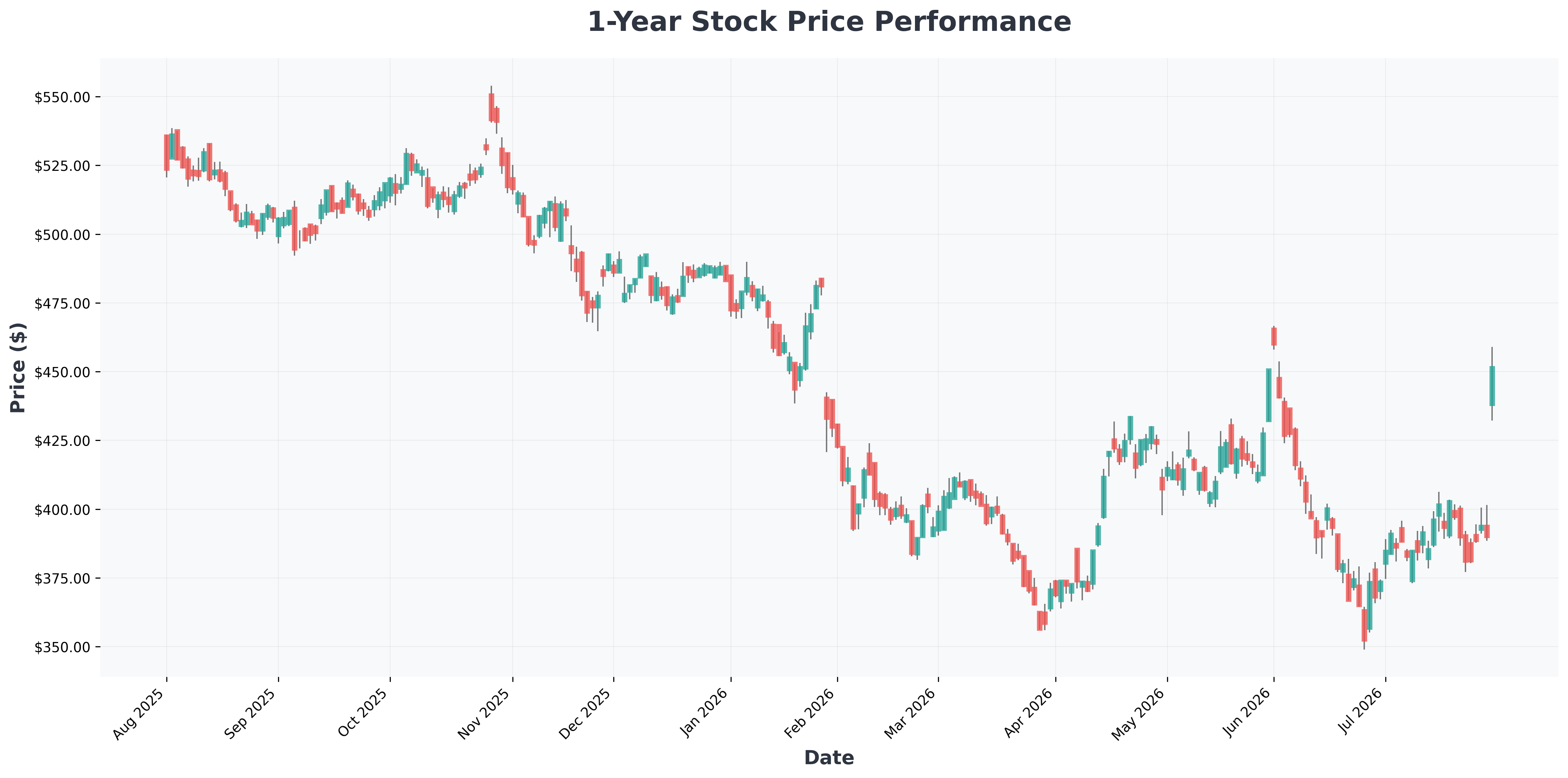
The report's findings are clear, but the investment implications are sparking a lively debate among market analysts. Let's break down the bull and bear cases.

Where the Money Goes: Budget Allocation & The Rise of ABM 🎯
The report's segmentation analysis reveals a strategic reallocation of marketing budgets across the board:
| Marketing Channel | % of Total Budget | Key Trend |
|---|---|---|
| Paid Digital (Intent-Driven) | 25-35% | Largest category, focus on high-intent campaigns over broad awareness. |
| Content, SEO & Thought Leadership | 15-25% | Original research and benchmark reports are top performers for lead quality. |
| Events & Field Marketing | 10-20% | Still vital for enterprise relationships and pipeline acceleration. |
| Partner Marketing | 8-15% | Growing importance of ecosystem and cloud marketplace partnerships. |
| Marketing Technology (AI, ABM Platforms) | 8-12% | Essential for personalization, predictive scoring, and automation. |
Account-Based Marketing (ABM) has emerged as the go-to strategy for enterprise demand generation. By focusing on target account lists and using intent data, companies are improving pipeline quality and accelerating complex sales cycles. This is a direct response to the complexity of modern buying committees, especially in the US market, which accounts for 45-50% of global SaaS spend.
📊 In-Depth Fundamental Analysis
| Company | Share Price | P/E Ratio | P/B Ratio | ROE | Operating Margin (OPM) | Revenue Growth |
|---|---|---|---|---|---|---|
| CRM (Salesforce,) | $184 | 21.30 | 4.40 | 16.91% | 21.80% | 13.30% |
| DDOG (Datadog,) | $268 | 669.92 | 23.91 | 3.93% | 0.80% | 32.20% |
| GTLB (GitLab) | $35 | 0.00 | 5.92 | -2.96% | -5.96% | 23.10% |
| HUBS (HubSpot,) | $237 | 124.27 | 6.18 | 5.01% | 3.30% | 23.40% |
| MSFT (Microsoft) | $465 | 25.89 | 7.80 | 34.04% | 45.11% | 17.70% |
| NOW (ServiceNow,) | $111 | 69.52 | 9.19 | 14.24% | 4.06% | 24.00% |
| SAP (SAP) | $184 | 24.16 | 58.68 | 18.32% | 27.62% | 9.40% |
| TEAM (Atlassian) | $101 | 0.00 | 29.40 | -19.29% | 9.38% | 31.70% |
| WDAY (Workday,) | $160 | 49.95 | 5.97 | 10.86% | 13.30% | 13.50% |

Strategic Outlook & Market Scenarios 🔮
Our analysis suggests the trends outlined in the report will only intensify. For investors and operators, the key takeaway is that marketing efficiency is now a competitive moat.
- Best-Case Scenario: Companies that successfully integrate AI-driven personalization with a PLG motion could see CAC decrease by a further 20-30%, driving significant margin expansion and market share gains. The push towards vertical SaaS and AI-first platforms will fuel the projected market growth to $650B.
- Worst-Case Scenario: Companies that cling to outdated, high-cost sales-led models without incorporating digital-first, intent-based strategies risk being outmaneuvered. They will face rising CAC, longer sales cycles, and pressure on valuations as investors punish inefficient growth.
The verdict is clear: the future belongs to data-driven, customer-centric demand generation. The shift towards PLG, ABM, and AI is not a temporary trend but a fundamental change in how B2B software is bought and sold.