The Countdown to History: SpaceX's $1.77 Trillion IPO 🚀
The investment world is holding its breath. SpaceX, Elon Musk's aerospace and satellite internet giant, is set to launch what could be the largest initial public offering (IPO) in history on June 12. With an offering price of $135 per share and a staggering 555.6 million shares on the table, the company is eyeing a valuation of $1.77 trillion. This isn't just another IPO; it's a potential seismic event for global markets.
But the big question on every investor's mind is simple: Will SpaceX stock soar immediately, or will it follow the historical path of most mega-IPOs and stumble? The answer, surprisingly, is written in the market's own history books. Let's break down the story, the risks, and the strategy.

The SpaceX Machine: Rockets, AI, and Starlink's Cash Flow 🛰️
Before we look at the historical playbook, let's examine the business itself. SpaceX is a multi-faceted giant operating in three high-growth arenas:
- Rocket Launches (The Core): SpaceX is the undisputed leader in orbital launches, completing 165 launches last year alone. The key to its profitability is reusability—85% of missions used a reusable booster, drastically cutting costs. The upcoming Starship aims to reduce costs even further, potentially opening up new markets.
- Starlink (The Cash Cow): This satellite-based internet service is the company's financial engine. In the last fiscal year, Starlink generated over $7.1 billion in adjusted EBITDA, proving the business model works at scale.
- AI & Data Centers (The Wild Card): While SpaceX's AI ambitions—from space-based data centers to Martian colonies—are exciting, they are also capital-intensive. The company reported a net loss of $4.9 billion last year on $18 billion in revenue, highlighting the immense investment required.
Investors should note: SpaceX is a story of revenue growth versus profitability. The market is betting on the former, but the latter will determine the stock's long-term stability.
The market is deeply divided on this IPO. Here’s how the Bull and Bear cases stack up:
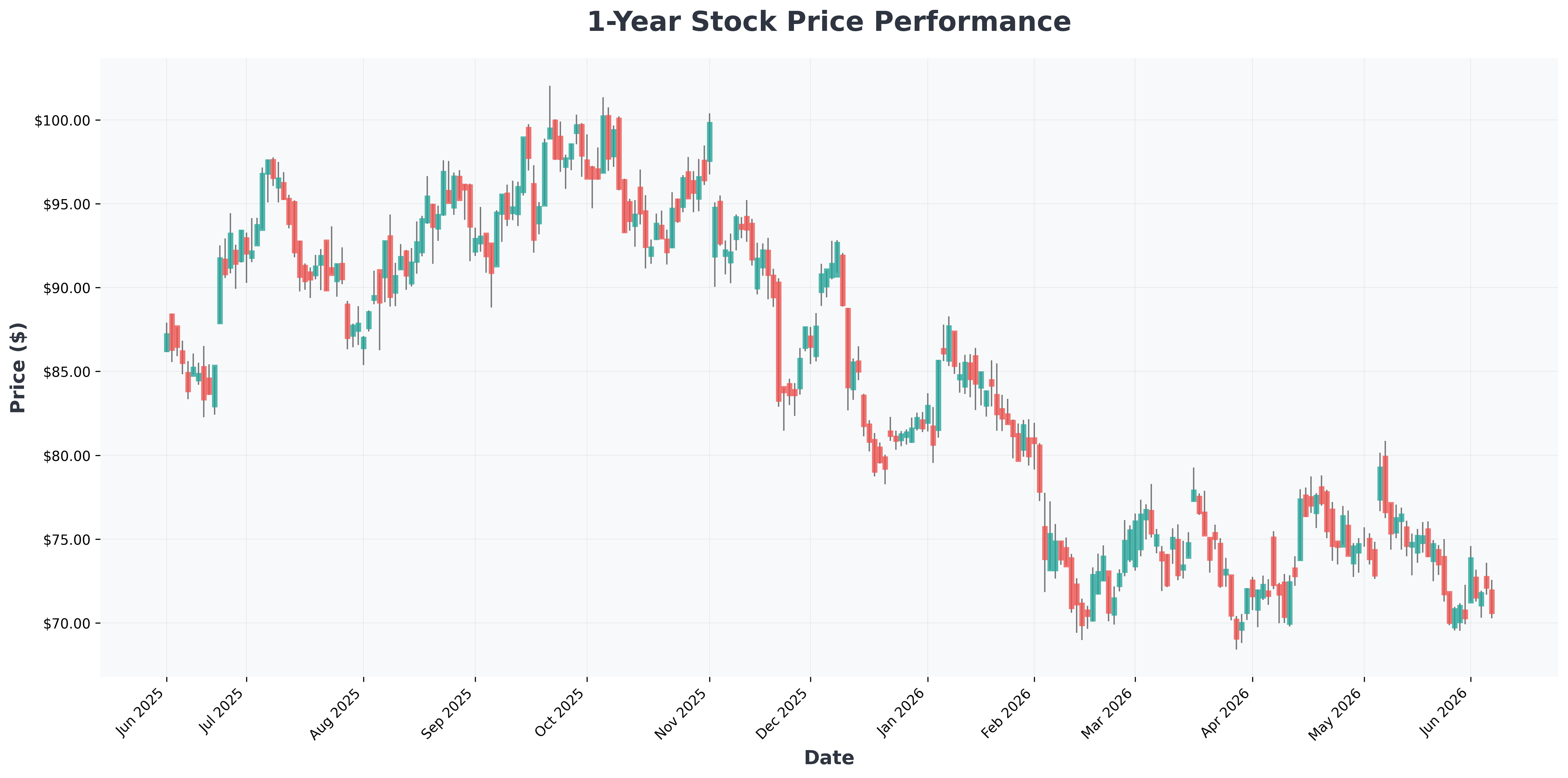

History's Verdict: The 'Curse' of the Mega-IPO 📉
A look at the 10 largest U.S. IPOs of all time reveals a remarkably clear and cautionary trend: 8 out of 10 posted negative returns in their first 12 months of trading.
| Company | IPO Date | 12-Month Return |
|---|---|---|
| Alibaba | Sept. 2014 | -30% |
| Meta Platforms | May 2012 | -31% |
| Uber Technologies | May 2019 | -21% |
| AT&T Wireless | April 2000 | -3% |
| Rivian | Nov. 2021 | -67% |
| Didi Global | June 2021 | -79% |
| United Parcel Service | Nov. 1999 | -15% |
| Coupang | March 2021 | -65% |
| Enel | Oct. 1999 | +1% |
| Arm Holdings | Sept. 2023 | +189% |
While recent success stories like Arm Holdings (up 189%) and CoreWeave (up 300%+ in early trading) offer a counter-narrative, they are the exceptions, not the rule. The overwhelming historical evidence suggests that buying into a mega-IPO at the open is often a losing bet in the short term.
AI Insight: From a technical perspective, massive IPO day volatility often creates a 'gap fill' scenario. Historically, stocks that gap up 50%+ on day one tend to retrace 30-50% of that gain within the first six months as early lock-up periods expire and initial hype fades.
📊 In-Depth Fundamental Analysis
| Company | Share Price | P/E Ratio | P/B Ratio | ROE | Operating Margin (OPM) | Revenue Growth |
|---|---|---|---|---|---|---|
| ARM (Arm) | $343 | 398.76 | 44.04 | 11.95% | 29.53% | 20.10% |
| BABA (Alibaba) | $121 | 18.62 | 1.79 | 9.22% | 1.01% | 2.90% |
| CPNG (Coupang,) | $15 | 0.00 | 6.97 | -3.99% | -2.85% | 7.50% |
| CRWV (CoreWeave,) | $100 | 0.00 | 11.22 | -40.67% | -6.93% | 111.60% |
| DIDIY (DiDi) | $4 | 118.67 | 1.12 | -2.69% | -1.16% | 10.30% |
| META (Meta) | $593 | 21.55 | 6.18 | 32.93% | 40.62% | 33.10% |
| RIVN (Rivian) | $16 | 0.00 | 4.68 | -65.69% | -63.79% | 11.40% |
| UBER (Uber) | $71 | 17.55 | 5.82 | 35.31% | 14.56% | 14.50% |

The Final Verdict: Aggressive vs. Cautious Playbook 🎯
So, what should you do? The decision comes down to your risk profile.
- For the Aggressive Investor: You might view any post-IPO dip as a buying opportunity. The long-term thesis for SpaceX (Starlink dominance, Starship cost disruption, AI potential) is incredibly strong. If you believe in the story, a small position at the IPO could be a lottery ticket.
- For the Cautious Investor: History says wait. The data suggests that a better entry point will likely appear within 6-12 months after the IPO. Waiting allows you to see a few quarters of earnings, assess how the market values the company, and buy at a potentially much lower price.
My Take: SpaceX is a phenomenal company, but the IPO price is pricing in perfection. History is not on the side of the immediate buyer. The smartest move is to add it to your watchlist, not your portfolio on day one. Let the market find its footing, and if the long-term thesis holds, you'll have plenty of time to get on board.