Legendary investor Stanley Druckenmiller just made a massive statement with his Q2 13F filing. 📄 The Duquesne Family Office didn't just trim its semiconductor exposure—it completely exited five chip and photonics stocks while simultaneously pouring over $200 million into Amazon and Alphabet.
This isn't a simple sector rotation; it's a fundamental shift in how one of the world's most successful investors views the AI value chain. The message is clear: the real money is in the companies buying the chips, not the ones making them. 🚨

The Great Semiconductor Exit
By the end of June, Duquesne had completely liquidated its positions in five chip and photonics companies:
- Micron Technology
- Intel
- Broadcom
- Lattice Semiconductor
- Coherent
This looks like a bearish verdict on the sector at first glance. However, a deeper look at the same filing reveals a more nuanced strategy. In the same quarter, Druckenmiller opened new positions in Advanced Micro Devices (AMD) and Lam Research, and increased his stake in Taiwan Semiconductor Manufacturing (TSMC) to 5.4% of the portfolio.
He didn't leave the semiconductor trade entirely; he just moved his chips to the center of the table. The names he kept and added are those with the strongest ties to the AI build-out, while the ones he sold are those facing the most competitive pressure. 🎯
This dramatic shift in strategy has sparked a lively debate among market analysts. Is this the right call? Let's look at both sides of the coin.
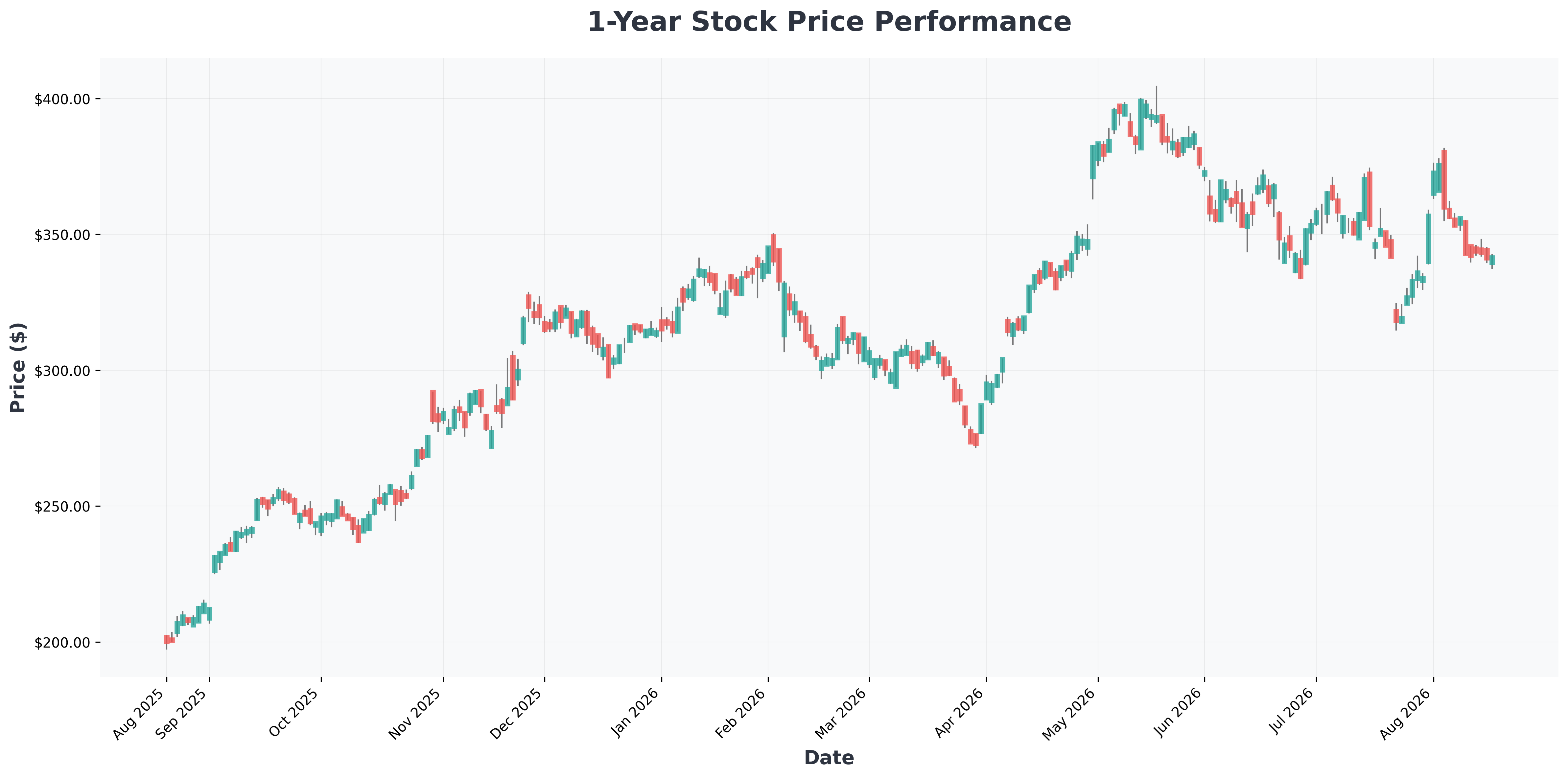

The Big Bet: Amazon & Alphabet
Amazon (AMZN): A 1,000% Position Increase
The most dramatic move was in Amazon. Duquesne increased its stake from 45,800 shares to a staggering 541,600 shares, an increase of over 1,000%. This position, worth ~$129 million, was further amplified by call options on another 459,300 shares.
This isn't just a bet on e-commerce; it's an AI infrastructure play. Amazon's cloud unit (AWS) saw revenue growth accelerate to 37% YoY, its fastest in 18 quarters. Furthermore, CEO Andy Jassy raised the 2025 capital spending plan to ~$220 billion, a massive sum aimed at AI infrastructure. Amazon's in-house chip business (Inferentia and Trainium) has also passed a $25 billion annual revenue run rate, giving the company a massive margin advantage. 📈
Alphabet (GOOGL): A Brand-New $120 Million Stake
Alphabet is a fresh addition to the portfolio. The new stake of 336,300 shares was worth about $120 million at the end of June. The company's Q2 earnings report fit the thesis perfectly: capital expenditures doubled YoY to $44.9 billion, and the full-year spending plan was raised to between $195 billion and $205 billion.
Just like Amazon, Alphabet designs its own critical silicon (TPU chips) and sells access to it via its cloud unit (Google Cloud). This dual role as both a buyer and designer of AI infrastructure makes them a more durable investment than a component supplier. 📊
The Core Difference: Who Has the Power?
The table below summarizes the core investment thesis:
| Company | Role in AI Ecosystem | Capital Expenditure | Key Advantage |
|---|---|---|---|
| Amazon (AMZN) | AI Infrastructure Buyer & Designer | ~$220 billion (2025 plan) | AWS market leader, In-house chip (Trainium) |
| Alphabet (GOOGL) | AI Infrastructure Buyer & Designer | ~$200 billion (2025 plan) | Google Cloud, TPU chip ecosystem |
| Sold Chip Stocks | AI Component Suppliers | N/A | Must compete for every order in every product cycle |
The Key Takeaway: A component supplier has to win its spot again in every product cycle. The companies placing the orders—Amazon and Alphabet—don't. They have the demand, the capital, and the pricing power. This is the ultimate power play in the AI trade. 💪
📊 In-Depth Fundamental Analysis
| Company | Share Price | P/E Ratio | P/B Ratio | ROE | Operating Margin (OPM) | Revenue Growth |
|---|---|---|---|---|---|---|
| AMD (Advanced) | $466 | 118.98 | 11.32 | 10.20% | 17.25% | 50.10% |
| AMZN (Amazon.com,) | $266 | 21.39 | 5.20 | 30.56% | 13.69% | 19.60% |
| AVGO (Broadcom) | $362 | 60.41 | 19.67 | 37.28% | 48.99% | 47.90% |
| COHR (Coherent) | $287 | 69.94 | 5.16 | 7.98% | 11.83% | 33.70% |
| GOOG (Alphabet) | $342 | 17.15 | 6.71 | 48.68% | 34.03% | 24.20% |
| GOOGL (Alphabet) | $345 | 17.30 | 6.77 | 48.68% | 34.03% | 24.20% |
| INTC (Intel) | $93 | 0.00 | 5.35 | -10.71% | 12.19% | 25.40% |
| LRCX (Lam) | $307 | 53.24 | 30.82 | 65.07% | 37.39% | 30.00% |
| LSCC (Lattice) | $118 | 470.72 | 20.50 | 4.93% | 13.33% | 62.20% |
| MU (Micron) | $937 | 21.19 | 10.50 | 66.64% | 80.37% | 345.70% |
| STM (STMicroelectronics) | $50 | 98.84 | 2.55 | 2.69% | 6.88% | 26.10% |
| TSM (Taiwan) | $412 | 30.87 | 84.74 | 39.97% | 60.34% | 36.00% |

Scenario Analysis & Conclusion
Bullish Scenario: If AI adoption continues to accelerate, Amazon and Alphabet will see massive returns on their $400+ billion combined capital expenditure. Their cloud divisions will become the primary profit centers, and their custom silicon will lower their cost-per-compute-unit, expanding margins.
Bearish Scenario: If the AI build-out slows down, these companies could face significant overcapacity and a devaluation of their infrastructure investments. However, given their dominant market positions and cash flows, they are far better positioned to weather a downturn than the chip suppliers, who would face inventory gluts and price wars.
Technical Context: Historically, when a legendary investor like Druckenmiller makes a concentrated shift like this, it often signals a multi-quarter trend. The move from suppliers to buyers suggests a maturation of the AI trade, focusing on those who can monetize the technology directly.
Ultimately, this 13F is a clear signal. Druckenmiller is betting that the durable, long-term value in AI lies with the companies that own the customer relationship and the capital budgets. It's a shift from selling picks and shovels to owning the mine itself. 🚀