Why Buffett Keeps Pointing Investors to the S&P 500 📌
Warren Buffett's track record at Berkshire Hathaway is the stuff of legend — roughly 19.7% annualized returns from 1965 through 2025, nearly double the S&P 500's 10.5% pace over the same stretch. Yet the Oracle of Omaha has consistently told ordinary investors to skip stock picking and buy a plain-vanilla S&P 500 index fund.
"In my view, for most people, the best thing to do is to own the S&P 500 index fund." — Warren Buffett, 2021 Berkshire Hathaway Annual Meeting
That's not just talk. When Buffett wagered $1 million against a group of hedge funds in the mid-2000s, the vehicle he chose to represent his side was the Vanguard S&P 500 ETF (VOO). He won that bet decisively.
The math behind the headline is simple: $400 invested monthly, reinvested dividends, and three decades of patience. That's how you get to roughly $820,000 — assuming the S&P 500 delivers returns similar to its last 30 years.
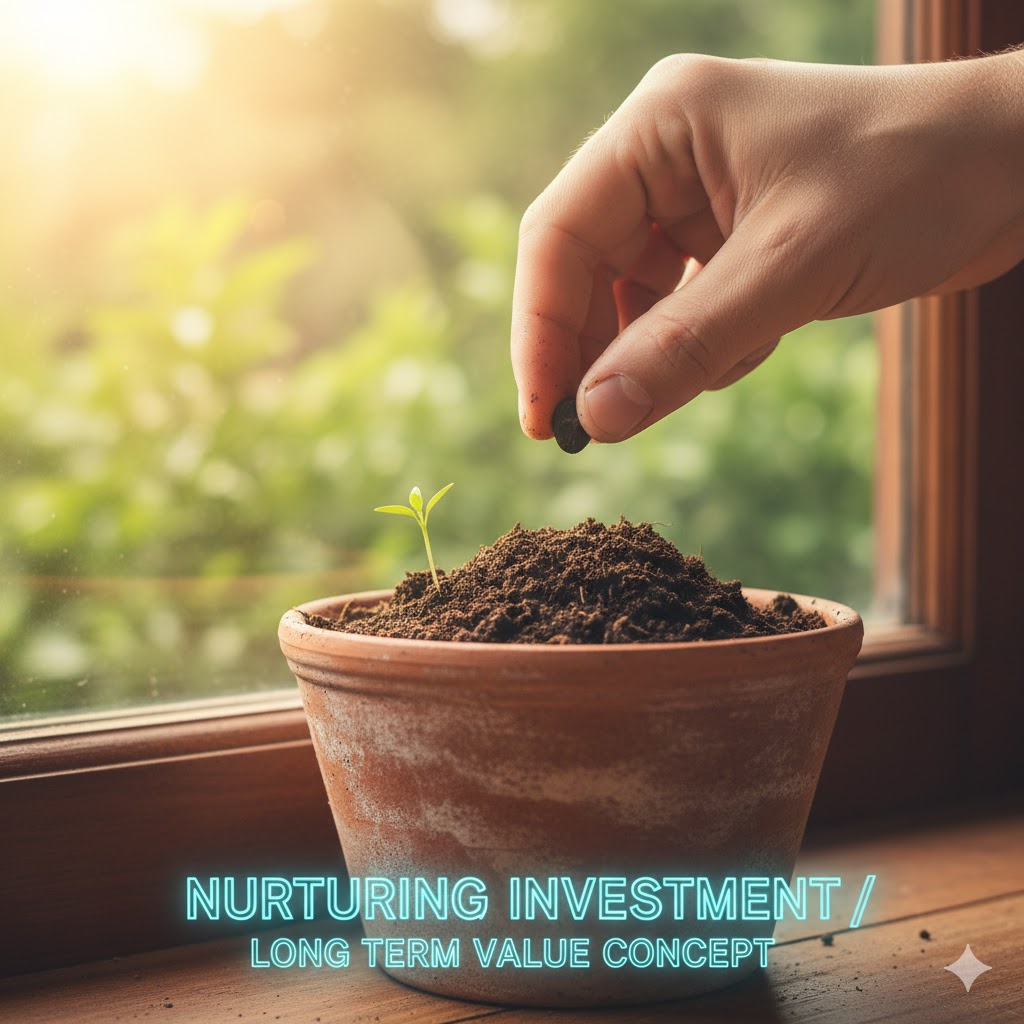
What You Actually Own Inside VOO 🏛️
The Vanguard S&P 500 ETF tracks the S&P 500, a benchmark covering 500 large-cap U.S. companies across all 11 GICS sectors. By market value, it represents about 80% of U.S. equities and over 50% of global equities — making it the single best barometer for American business.
Top 10 Holdings (Approximate Weights)
| Rank | Company | Weight |
|---|---|---|
| 1 | Nvidia | 8.1% |
| 2 | Apple | 7.0% |
| 3 | Microsoft | 5.7% |
| 4 | Alphabet | 5.4% |
| 5 | Amazon | 3.8% |
| 6 | Broadcom | 2.7% |
| 7 | Meta Platforms | 1.9% |
| 8 | Micron Technology | 1.6% |
| 9 | Tesla | 1.6% |
| 10 | JPMorgan Chase | 1.4% |
Buffett's Four Core Arguments
- Stock picking is hard work. "Never invest in a business you cannot understand," Buffett warns — and most retail investors simply don't have the bandwidth to do proper due diligence on individual names.
- Even pros struggle to beat the index. Buffett's 10-year hedge fund bet proved this in public.
- The U.S. economy is a compounding machine. Roughly 75% of the world's 20 largest public companies are American. "For 240 years it's been a terrible mistake to bet against America," Buffett wrote in 2016.
- Costs matter enormously. VOO's expense ratio is just 0.03% — that's $3 per year on a $10,000 position. Active managers typically charge 50–100x that, with worse net results.
A Technical Note for Chart Watchers
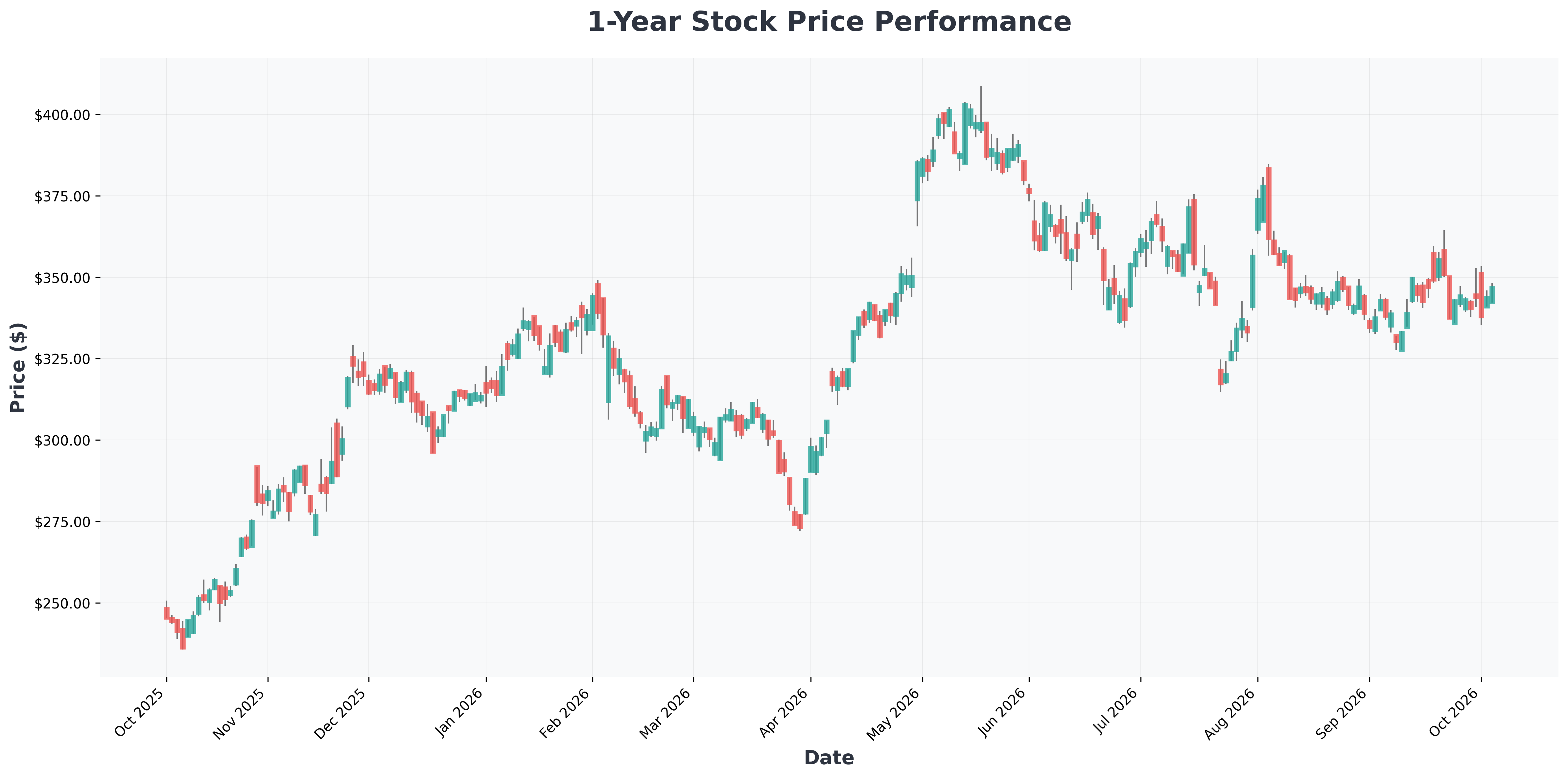
While VOO is a long-term compounding vehicle, short-term traders should note that the ETF has historically found support near its 200-day moving average during pullbacks, and the S&P 500 has averaged a ~14% intra-year drawdown even in positive years. Expect volatility; size positions accordingly.
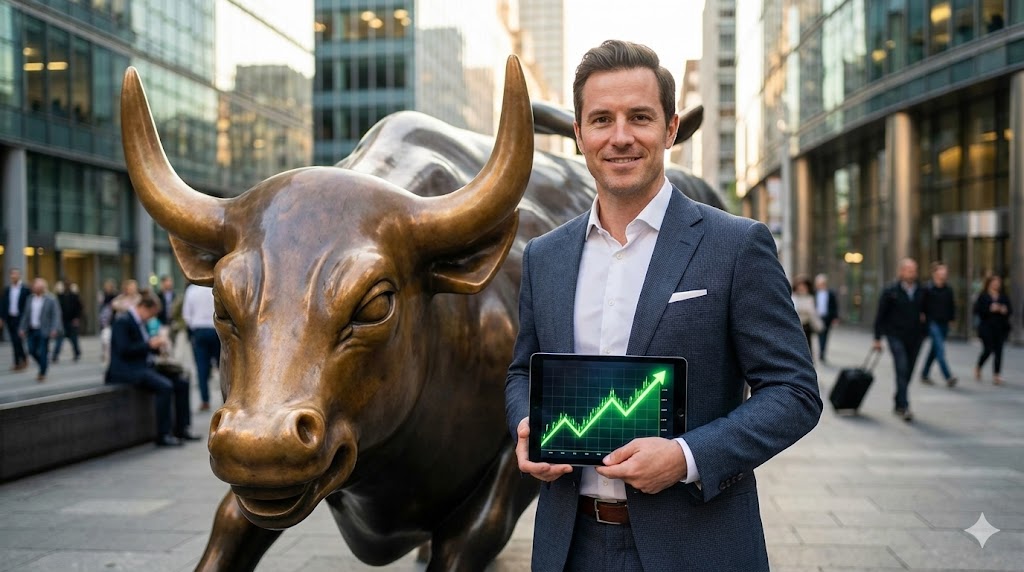
Not everyone agrees that loading up on the S&P 500 at today's valuations is a smart move. Here's how the bull and bear camps are framing it:
The Math: $400/Month → $820,000 💰
Over the last three decades, the S&P 500 returned 1,790% total (about 10.2% annualized) — and that's through three U.S. recessions, 16 market corrections, and four full bear markets. The index's resilience is exactly why Buffett keeps recommending it.
If the S&P 500 delivers similar forward returns, here's what consistent monthly investing looks like with dividends reinvested:
| Time Horizon | Total Contributed | Portfolio Value |
|---|---|---|
| 10 years | $48,000 | ~$77,000 |
| 20 years | $96,000 | ~$281,000 |
| 30 years | $144,000 | ~$820,000 |
The key insight: the last decade does the heaviest lifting. Compounding is back-loaded, which is why starting early — even with a modest $400/month — matters far more than timing the market.
Historical Precedent Worth Noting
Looking back at prior 30-year rolling windows, the S&P 500 has never delivered a negative total return over any three-decade period since the 1930s. That doesn't guarantee the future, but it's a powerful argument for long-horizon discipline over short-term trading.
📊 In-Depth Fundamental Analysis
| Company | Share Price | P/E Ratio | P/B Ratio | ROE | Operating Margin (OPM) | Revenue Growth |
|---|---|---|---|---|---|---|
| AAPL (Apple) | $334 | 38.26 | 45.33 | 148.75% | 32.62% | 16.40% |
| AMZN (Amazon.com,) | $256 | 20.62 | 5.01 | 30.56% | 13.69% | 19.60% |
| GOOG (Alphabet) | $345 | 17.29 | 6.77 | 48.68% | 34.03% | 24.20% |
| GOOGL (Alphabet) | $348 | 17.45 | 6.83 | 48.68% | 34.03% | 24.20% |
| MSFT (Microsoft) | $529 | 29.49 | 8.89 | 34.04% | 45.11% | 17.70% |
| NVDA (NVIDIA) | $239 | 30.25 | 25.23 | 117.21% | 66.24% | 105.90% |

Scenario Analysis: Best Case vs. Worst Case 🎯
🐂 Best-Case Scenario
- S&P 500 delivers its historical ~10% annualized return
- Investor stays fully invested through every drawdown
- Dividends reinvested without interruption
- Result: ~$820,000 on $144,000 contributed — a 5.7x multiple
🐻 Worst-Case Scenario
- Forward returns compress to ~6% annualized (a plausible outcome given elevated starting valuations)
- Investor panic-sells during a 30%+ bear market
- Result: Portfolio lands closer to $400,000–$450,000 — still a 3x return, but half the headline number
The Bottom Line
Warren Buffett's advice isn't glamorous, and it isn't exciting. That's the point. The Vanguard S&P 500 ETF offers broad U.S. equity exposure at a 0.03% expense ratio, and history suggests that investors who consistently add to an S&P 500 index fund — through thick and thin — tend to build meaningful wealth over multi-decade horizons.
⚠️ Risk reminder: Past performance does not guarantee future results. Equity markets can and do fall 30–50% in severe downturns. Only invest capital you won't need for at least 5–10 years, and consider your full financial picture before committing to any strategy.